
Guide to Language ISO Codes & Country ISO Codes

While working on a multi regional and multilingual website you would like to make sure that you use the right language and country ISO codes. This article will help you with all the language ISO codes and country ISO code which you can use for multi regional and multilingual website. Language Country Language ISO Code Country ISO Code Afrikaans South Africa af ZA Albanian Albania sq AL Arabic Algeria ar DZ Arabic Bahrain ar BH Arabic Egypt ar EG Arabic Iraq ar IQ Arabic Jordan ar JO Arabic Kuwait ar KW Arabic Lebanon ar LB Arabic Libya ar LY Arabic Morocco ar MA Arabic Oman ar OM Arabic Qatar ar QA Arabic Saudi Arabia ar SA Arabic Syria ar SY Arabic Tunisia ar TN Arabic United Arab Emirates ar AE Arabic Yemen ar YE Armenian Armenia hy AM Azeri Azerbaijan az AZ Basque Basque eu ES Belarusian Belarus be BY Bulgarian Bulgaria bg BG Catalan Catalan ca ES Chinese China zh CN Chinese Hong Kong SAR zh HK Chinese Macau SAR zh MO Chinese Singapore zh SG Chinese Taiwan zh TW Croatian Croatia hr HR Czech Czech Republic cs CZ Danish Denmark da DK Dhivehi Maldives div MV Dutch Belgium nl BE Dutch The Netherlands nl NL English Australia en AU English Belize en BZ English Canada en CA English Caribbean en CB English Ireland en IE English Jamaica en JM English New Zealand en NZ English Philippines en PH English South Africa en ZA English Trinidad and Tobago en TT English United Kingdom en GB English United States en US English Zimbabwe en ZW Estonian Estonia et EE Faroese Faroe Islands fo FO Farsi Iran fa IR Finnish Finland fi FI French Belgium fr BE French Canada fr CA French France fr FR French Luxembourg fr LU French Monaco fr MC French Switzerland fr CH Galician Galician gl ES Georgian Georgia ka GE German Austria de AT German Germany de DE German Liechtenstein de LI German Luxembourg de LU German Switzerland de CH Greek Greece el GR Gujarati India gu IN Hebrew Israel he IL Hindi India hi IN Hungarian Hungary hu HU Icelandic Iceland is IS Indonesian Indonesia id ID Italian Italy it IT Italian Switzerland it CH Japanese Japan ja JP Kannada India kn IN Kazakh Kazakhstan kk KZ Konkani India kok IN Korean Korea ko KR Kyrgyz Kazakhstan ky KZ Latvian Latvia lv LV Lithuanian Lithuania lt LT Macedonian Republic of North Macedonian mk MK Malay Brunei ms BN Malay Malaysia ms MY Marathi India mr IN Mongolian Mongolia mn MN Norwegian (Bokmål) Norway nb NO Norwegian (Nynorsk) Norway nn NO Polish Poland pl PL Portuguese Brazil pt BR Portuguese Portugal pt PT Punjabi India pa IN Romanian Romania ro RO Russian Russia ru RU Sanskrit India sa IN Serbian Serbia sr SP Slovak Slovakia sk SK Slovenian Slovenia sl SI Spanish Argentina es AR Spanish Bolivia es BO Spanish Chile es CL Spanish Colombia es CO Spanish Costa Rica es CR Spanish Dominican Republic es DO Spanish Ecuador es EC Spanish El Salvador es SV Spanish Guatemala es GT Spanish Honduras es HN Spanish Mexico es MX Spanish Nicaragua es NI Spanish Panama es PA Spanish Paraguay es PY Spanish Peru es PE Spanish Puerto Rico es PR Spanish Spain es ES Spanish Uruguay es UY Spanish Venezuela es VE Swahili Kenya sw KE Swedish Finland sv FI Swedish Sweden sv SE Syriac Syria syr SY Tamil India ta IN Tatar Russia tt RU Telugu India te IN Thai Thailand th TH Turkish Turkey tr TR Ukrainian Ukraine uk UA Urdu Pakistan ur PK Uzbek Uzbekistan uz UZ Vietnamese Vietnam vi VN Related Article: EFD Induction Multi Regional and Multilingual SEO Case Study
EFD Induction Multi Regional and Multilingual SEO Case Study
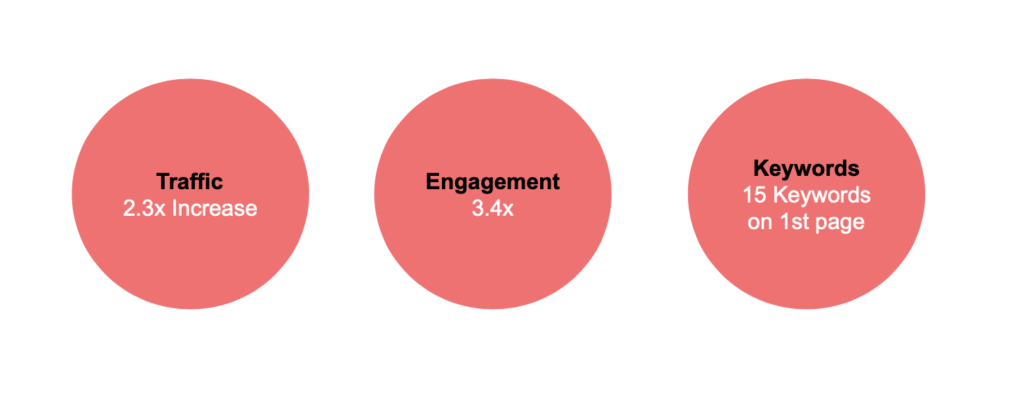
Multi Regional & Multilingual SEO Strategy is very crucial for any business which is present across different regions. With a help off multi regional and multilingual, a business can drive quality traffic, be relevant to the customers in different countries and grow business rapidly. In this article I will take you through how we built multi regional & multilingual SEO strategy to grow business for EFD Induction. So let’s get started About EFD Induction EFD Induction provides industrial induction heating processes across 12 different countries. It caters to different industries including Automotive, Aviation, Power Generation, Oil & Gas, HVAC, Railway, Shipbuilding, Tube & Pipe and more. EFD Induction provides best in class solutions which are cost effective, safe, robust and minimise energy consumption. EFD Induction is headquartered in Norway and we were appointed as the Digital Marketing Agency to drive SEO The Strategy 1. The URL Structure Having the right URL structure is important is very important to rank in different regions for different languages. So we used a subdirectories with gLTD structure like Eg: www.domainname.com/languagecode-countrycode/, which incorporates the language and region code in the URL itself So the URL’s for each geography changed as below: Italy: https://www.efd-induction.com/it-it/ wherein it is the language code for Italian language and it is the country code for Italy Germany: https://www.efd-induction.com/de-de/ wherein de is the language code for German language and de is the country code for Germany France: https://www.efd-induction.com/fr-fr/ wherein fr is the language code for French language and fr is the country code for France Poland: https://www.skyn.com/pl-pl/ wherein pl is the language code for Polish language and pl is the country code for Poland Here is a list of language ISO codes and country ISO codes which you can refer to while defining URL structure – Language & Country ISO Codes 2. On Page Optimization Optimising key on page aspects with the keyword is relevant to the page and has high searches. EFD Induction Italy – Tags Optimization EFD Induction Germany – Tags Optimization EFD Induction France – Tags Optimization Similarly other 9 regions were optimised for title & description Further we optimised the heading tag (h1) for all the pages with the business keyword as below Italy – <H1> Prodotti di riscaldo ad induzione Germany – <H1> Induktive Erwärmungsanlagen France – <H1> Equipements de chauffage par induction Poland – <H1> Nagrzewanie indukcyjne Similarly heading tags were optimised for all the pages on the website, for remaining other 8 regions Further other tags including image tags and anchor tags were optimised. 3. Content Optimization Optimising content which articulates the product in brief and influences decision of customers. Content example Italy Content example Germany Content example France Optimising Downloads Section We further optimised the entire content on the downloads section as the idea was to make sure that the pdfs ranked on Google search and bring in more traffic Italy France Germany We further optimised the content on Industries, Application and Services page, making it search friendly and highly optimised. 4. Off Page Strategy We defined an off page strategy to improve share of voice and domain authority by publishing content pieces on different websites related to Industrial Heating, this helped us to boost the ranking of the website by leveraging external links Few examples are as below: Example 1: Example 2: Results:
4 Digital Marketing Case Studies for Rural India
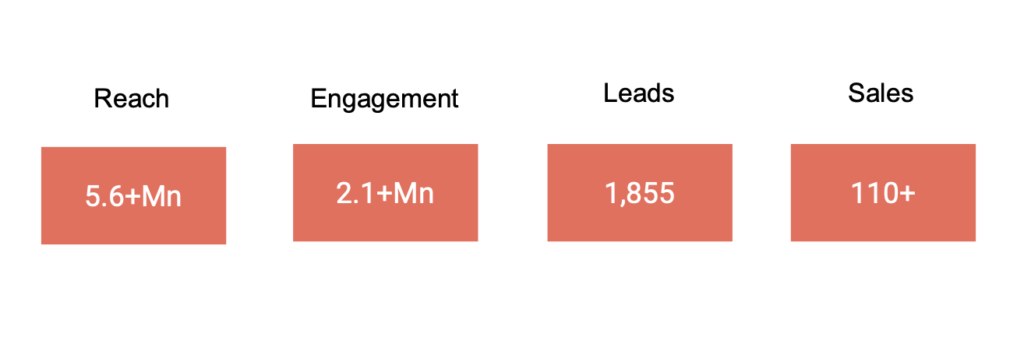
Internet users in rural India are around 227 million as per research firm Nielsen, and total India has 504 million active internet users. Due to connectivity, quality of service and affordability in rural India, the numbers are increasing day by day, so the potential for brands to connect and engage has rise. Brands need to leverage Digital Marketing, connecting with the users in a way that make an impact through the channels used in digital. Below are few Digital Marketing case studies of Rural India campaigns which we have executed for NETAFIM & Japfa NETAFIM India – Krishi Samvaad NETAFIM India – Farming Simplified Japfa India – Clean Farm Challenge Japfa India – COVID Let’s understand each of them 1. NETAFIM India – Krishi Samvaad NETAFIM is a global leader in irrigation solutions, their objective was to connect with the farmers and showcase the value of drip irrigation, so that the yield increases for different crops which they are planning. We crafted a strategy that focused on communication different pieces related to crop including: Why drip irrigation for crop? Different types of techniques used in drip irrigation Less Water Wastage Less use of fertilisers We communicated all these pieces by creating a social media property called as Krishi Samvaad Krishi Samvaad property was a live content piece by Agronomist communicating different aspects including why drip, best practices, how to increase yield, technical aspects, save water etc for crops including Sugarcane, Ginger, Turmeric and Banana. This property was broadcasted on social media in different languages including Marathi, Gujarathi, Kannada, Tamil and Telugu The Impact Read detail case study here – NETAFIM India Krishi Samvaad Case Study 2. NETAFIM India – FlexNet NETAFIM India wanted to launch FlexNet flexible pipes through digital, create awareness, showcase value proposition and wanted to drive traction for the product. So in order to launch the product on digital, we crafted a communication campaign, #FarmingSimplified which focused on positioning the thought, now farming is simplified through FlexNet pipes and it allows more flexibility to farmers compared to traditional method of using pipes. The campaign started with teasers raising questions Can farming become simpler? Can there be a cost-effective way to do farming? Can farming be more innovative? Post teasers, we revealed the FlexNet film which communicated what value the product brings in, including performance, durability, flexibility, ease with connectors and low labour cost for entire irrigation system. We further delayed a multi-lingual strategy to launch the product in different regions of India The Impact Read detail case study here – NETAFIM India FlexNet Case Study 3. Japfa India – Clean Farm Challenge Japfa is a leading agro industrial company with a prime focus in poultry feed. If offers Poultry & Integration along with feed solutions globally. The objective of the campaign was to reach prospective poultry farmers and educate them on the benefits of poultry farming, enhance brand reach and drive engagement. So we crafted a digital marketing strategy which focused on communicated below pieces: JapfaNeeti Product Feed Portfolio Farmer Meets Coverage Clean Farm Challenge Clean Farm Challenge was one of the effective campaign we did to drive buzz and engagement. It was a challenge where farmers were asked to follow 5 simple biosecurity measures and share their videos on Facebook and WhatsApp. The campaign was launched with a film and promoted on social channels to drive traction, here is the film Swacch Farm Challenge Participation Process The Impact Read detail case study here – Japfa India Clean Farm Challenge Case Study 4. Japfa India COVID-19 The objective of the campaign was to assure and instill faith in customers that, “Consuming Chicken is Safe” during the COVID times The strategy focused on content pillars including communicating quality & hygiene assurance and benefits of consuming chicken during COVID-19 Celebrating Japfa Heros We created videos which showcased hygiene & safety measures taken at Japfa’s manufacturing plant and bird grower farms, which highlighted Japfa COVID warriors who worked during the COVID times to serve the protein needs of the country through Chicken and Eggs. Read detail case study here – Japfa India COVID-19 Case Study
Interpreting Google Ads Auction Insights Report

Auction insights report is one of the key reports to look at in Google ads. Auction insights report provides valuable data which can be leveraged to drive high visibility on Google search. What is Auction Insights Report? Auction Insights report in Google ads provides information related to other advertisers who are also participating in the auction process for the keywords which you have targeted in your campaign. Always remember auction insights report shows data based on what keywords you have targeted vs same keywords which other advertisers have targeted. Another important thing to note is that, you don’t get keyword level data of other advertisers but you get different metrics data including impression share, overlap rate, position above rate, top of page rate and absolute top of page rate. How to Access Auction Insights Report? Once you are logged in on your Google ads account, you will see auction insights on the left hand side, one below the campaigns and second below ad groups. What level should we look at the auction insights report? You should look at auction insights report from two levels Campaign Level – Which will give you different metrics data for all the campaigns Adgroup Level – This will give you different metrics data for a specific campaign. It’s always recommended that you look at the data from campaign level, because each campaign might be targeted for a different product or service and it would be market in different geography. So auction insights reports will help you to understand how are your performing versus other other advertisers. Different Metrics in Auction Insights Report * Impression Share * Overlap rate * Position Above Rate * Top of Page Rate * Absolute Top of Page Rate * Outranking Share Let’s understand each one in detail by looking at the report below of a real estate business. So in this report if you view the left hand side column, you will see different advertisers mentioned including Apartments, Zillow, Rentcafe etc, these are the advertisers who are also bidding on the same keywords which you are bidding. And in the fourth row, you can see “You”, this row data is yours ads account. So let’s get started with the metrics. Impression Share Impression share is the percentage of time a brands ad was visible on Google search. From the above example, let’s try to read the data and understand. “You” which is your impression share is less than 10% which means that you (the real estate advertiser) has only achieved less than 10% of the impression share from the targeted keywords. Similarly Zillow’s impression share is 16.35%, Apartments impression share is 31.44% Overlap Rate Overlap rate is how often another advertiser’s ad was triggered when your ad was triggered on Google search. From the above example, you can see apartments overlap rate is 26.45% which means that whenever your ad (You) was triggered, apartments was visible 26.45% times on Google search. Similarly Zillow was visible 19.08% times, Rentcafe 4.64% times and so on Position Above Rate Position above rate is how often another advertiser ranked above you when the ad was triggered on Google search. From the above example, you can see that Apartments position above rate is 62.09%, which means apartments was 62.09% ranking above “You” whenever the ad was triggered on Google search. Similarly Zillow was 34.35% above, Rentcafe was 85.55% above and so on Top of Page Rate Top of page rate is how often your ad or other advertisers ad was shown at the top of the page in Google search. From the above example, you can see that your top of page rate is 57.94%, which means you were at top in search results 57.94% times. Similarly Apartments was 88.01% times, Rentcafe was 88.46% times and so on. Absolute Top of Page Rate Absolute top of page rate is the percent of your impressions that are shown as the very first ad above Google organic search results From the above example, you can see that 11.63% is your absolute top of page rate which means your ads were above the ogranci search results 11.63% times. Similarly apartments ads were 27.84% times, Zillow was 12.71% and so on Outranking Share Outranking share is how often you ranked higher when the ad was triggered on Google search. For example, Zillow’s outranking share is 8.23% which means Zillow was ranking higher 8.23% above “You” when the ad was triggered. Similarly, Apartment was 7.36%, Rentcafe was 8.45% and so on. Interpreting Google Ads Auction Insights Report Let’s take the above example of real estate business to do the interpretation. a. From the above you can see that your “You” impression share is less than 10% which is very low, because if you are losing impression share, it means you are losing potential, so if you are not visible, you won’t be able to drive users to your web properties. So what is an idea impression share, which you should target, you should target at least 85% of impression share on Google search, this is possible if you have highly optimised your campaigns. Key things which you should look at to improve impression share include keywords, relevancy of keywords, quality score, ad rank, CTR and budget. b. If you observe that a competitor has a high position above rate, which in our example is apartments who have high impression share and high position above rate, it means that the competition is getting maximum traction from search potential, so you should focus on improving your ad rank by improve quality score, ctr, relevancy of ad copy and landing page. (learn more about ad rank – Click here) c. Next, look at the top of page rate. In the above example, “You” has a top of page rate of 57.94% which is low, so if also have a low top of page rate, you should improve it by optimising your campaign for keywords, bid, bid strategy, quality score and mobile optimisations
Flipkart Dynamic Creative Optimization (DCO) Case Study

Dynamic Creative Optimization (DCO) is an advanced digital marketing practice followed by most of the large advertisers, it helps to automate display advertising, build story through multiple ad creatives, helps to dynamically create remarketing journey and boosts ROI. To know more about Dynamic Creative Optimization, different variables in DCO and it’s benefits, visit article An Ultimate Guide to Dynamic Creative Optimization (DCO) In this article, we will understand how we created dynamic creative optimization journey for Flipkart (popular ecommerce company in India) Objective Improve sales with higher ROAS What we learnt from historic data before starting off? Users were viewing multiple products on mobile category, but the conversion rates were low Many users were adding the products to the cart, but the cart abandonment rate was high We measured click throughs of different touch points available on the product pages including compare option, view offers, colour, call to actions and Q&A What Consumers Cared About in Mobile Category Storage Camera Colour RAM Display Reviews Offers/Discount Dynamic Creative Optimization (DCO) Strategy We leveraged website data, learnt through different user touch points and automated the communication journey dynamically Here is the DCO journey which triggered dynamically to users who added Samsung Galaxy J7 Pro product in the cart but did not transact. All the information on the creative is dynamically pulled in real time from the product page, when the ads are served on different publishing websites. The first creative in the journey highlights camera feature of the product as soon as the users leaves the website without making the purchase The second creative highlights the social camera aspect of the product The third creative highlights the performance of the product, including display and memory. All the info is dynamically pulled from the product page in realtime The fourth creative in the journey talks about the product delivery Fifth creative talks about product under XYZ (using screenshot of product less than 10k, but actually product was used) Sixth creative communicates, it’s a best seller product with 4.4 rating Seventh creative highlights the ratings received for the phone on Flipkart product page, which gives indication to the customers that lot of users have bought the product and have reviewed it on Flipkart Eight creative highlights lowest price in last 24 hours, exchange and extra discount Finally if the user has still not bought the product, offer ending communication is triggered The Impact This strategy is was further leveraged to all the other products in mobile category, which created an automated way to dynamically triggered data points through user behaviour and website content. So in this case one logic which is build is applicable of multiple products within the same category, how cool! Conclusion DCO is highly scalable for businesses who want to automate the advertising journey learning through user behaviour and data points available on different systems. So, leverage the power of DCO and grow your business! Want to boost your marketing campaign performance? Use HockeyCurve’s dynamic creative platform to enhance engagement and optimize your spend.
Digital Marketing Case Study Evolve Back Resorts

Hospitality businesses are leveraging digital marketing to connect with customers, engage them and improve occupancy rates. We have been working with India’s top hospitality brand Evolve Back Luxury resorts for 4 years and we have been successful in making a huge impact to improve visibility and occupancy rate. So let’s understand how we did it! About Evolve Back Luxury Resorts Evolve Back Luxury Resorts, formerly known as Orange County Resorts and Hotels, is a premium resort with properties in Coorg, Hampi, Kabini & Botswana. The Hampi resort is Vijayanagara Palace Themed resort & the Kabini resort is Kuruba Tribal Village themed resort. The Coorg resort lies within a 300 acre coffee plantation, surrounded by virginal forest. The properties at Evolve Back offer private pool villas with experiences including coracle ride, plantation walk, boat safari and more. It is a place to have a memorable holiday experience for family, friends and couples. Evolve Back Resorts brand philosophy is “Spirit of the Land” which is inspired by air, land, history, culture and natural beauty of the nature. Objective The objective of the brand was to: Improve brand visibility on Google search through paid ads Improve occupancy rate & reservations Brand Uplift Strategy Theme based campaigns Content Strategy Targeted search campaign Remarketing through Search, Display & Video Hotel advertising 1. Theme Based Campaigns We crafted theme based strategy to drive visibility and communicate different aspects of the resort. a. Shades of Green We created this campaign for monsoon season to communicate with the audience about the natural beauty of the resort, and how they can reset their mind and energise in lush green property of Evolve Back Coorg. Below are few creative of the campaign b. Spirit of Romance Spirit of Romance campaign focused on reaching out to couples, and highlighting the romantic experience within the resort. As the resort also offer honeymoon packages, this campaign also saw huge traction for honeymoon package bookings. c. Festivities Festivities theme focused on encouraging audiences to celebrate festivals at Evolve Back Resorts d. Spirit of Resort Spirit of Resort theme focused on different aspects of the each resort including wildlife, private pools, peace and nature e. Call of the Hills Call of the Hills campaign focused on communicating paradise, interiors, cuisine, air, valleys, birdsong, forests and forest steam within the resort. 2. Content Strategy We further build content for each resort in form of video to communicate different themes including elegance, locale, romance, innovation etc a. Spirit of the Land Spirit of the land – Evolve Back Chikkana Halli Estate, Coorg Spirit of the Land – Evolve Back Kuruba Safari Lodge, Kabini Spirit of the Land – Evolve Back Kamalapura Palace, Hampi b. Romance Coorg – Romance Kabini – Romance Hampi – Romance c. Elegance Coorg – Elegance Hampi – Elegance Kabini – Elegance d. Theme & Location Hampi – Theme & Location Kabini – Theme & Location 3. Targeted Search Campaign Our Google ads search strategy focused on 5 key aspects as below Targeted Search – We focused on high intent keywords to drive quality users to property pages and experiences pages. Differential Bidding – Differential bidding was used to drive users from multiple search terms, which helped to drive more users at a lower cost. Competition Terms – Competition terms were further targeted to drive users who were looking for competition properties on search. The ads communicated the value proposition of the businesses and the experience the resort offered, which helped to get more users in the sales funnel. RLSA – Remarketing users on search helped to target users who were still researching on Google. We communicated. The ads communicated a differential messaging which encouraged the users to visit the resort pages again. Key Metrics – We improved the key metrics including CTR, Conv. Rate, Quality Score and Cost per booking by optimising keywords, search terms, ad copies, cpc and ad communication, which resulted in more reservations at lower cost. The Impact:
Guide To Move Your Store Online

One of the many things that the Pandemic has changed, is the ways in which direct consumers are interacting with the businesses. The lockdown and social distancing have kept us away from seeing our friends and close ones as frequently as we used to. It is no different in the case of a brick and mortar store. With an ever-rising number of cases, shopping at a retailer isn’t the first thing on your customer’s mind these days. But this does not need to go against the businesses. Instead, it is a blessing in disguise for all the offline retail businesses who probably thought that e-commerce was affecting their business negatively. It is no surprise that the increasing penetration of the internet has made information accessible on-the-go. According to a report by Statista, India is expected to have up to 350 million shoppers by 2025. Furthermore, various digital advancements such as digital payments, improved logistics by existing online companies and friendly FDI policies will support the growth of e-commerce in the coming years. Specific advantages of moving a store online: 1. Establishing a 24*7 presence: Unlike a brick and mortar store, you don’t need to disappoint a customer by hanging that closed sign. We are living in a world where the idea of free-will is leveraged by many businesses to suit their customers convenience. Meaning, your customer can go through the details of your business offerings at their own convenience right from picking their own time and place, to access information about you. At the same time, you ensure that your potential customer finds you when they need that product and don’t go to your competitors. 2. Enhanced customer experience: Instead of utilizing the resources to give detailed information, dedicating time to resolve repeated customer queries and so on, the online website enables you to put together all the information on the website, have FAQs listed and update information with ease. This not only helps you optimize your business resources but also offers faster and better customer support to your potential customers. 3. Lower costs: As an offline store, there are costs barriers to business expansion. But with an online business, you get access to reach a wider range of customers without having to worry about the overheads. Tying up with suppliers also reduces the hassle of inventory costs and can offer speedy delivery of your product at the customer’s doorstep. Where do you start and which platforms to use? Instead of having to go through the process of building your own website and then optimizing it, you can get a headstart by subscribing to software services provided by D2C platforms such as Shopify. This platform offers a customized solution to setting up an online store without having to worry about the technicalities of the digital world. With a presence in 175 countries, Shopify has over 1 million businesses running on its platform. The first step is to create an account on Shopify with your email, password and business name for a 14 days trial. You can pick up a domain name for your business and register it using Shopify itself. This business name will be used as a default URL for your online shop which customers will access to view and buy products. There are three different plans offered by Shopify – Basic Shopify, Shopify and Advanced Shopify with different features and capabilities. It is always advisable to start with the basic plan and based on the scale of your business, you can always seek advancements. Shopify allows you to choose from a variety of themes to offer a great visual appeal to your online shop. There are more than 100 free and paid-for Shopify themes available. Under settings, you can set up an Account email for communication with Shopify and customer email (support@yourbusiness.com) through which your customers can contact you. Setting up payment gateways, checkout pages and shipping are all simplified by the platform. All you have to do is choose the settings that are executable by your business. Once the settings are in place, you can start listing your products on your online store under the tab – Products. Ensure having an appropriate title and description of each product with updated images and prices. Furthermore, Shopify makes it easy to view, track and adjust inventory with a couple of clicks, importing and exporting inventory with CSV files and hiding products which are out of stock. The analytics provided by Shopify also gives you ABC analysis of products. In cases where you have partnered with suppliers to fulfill the delivery of the product, you can simply integrate a 3rd party software and choose dropshipping. Basically, depending on the product or service you are selling, Shopify has flexible and different ways to offer easy shipping options. Other Platforms to Build Your Store: WooCommerce BigCommerce OpenCart Wix Magento Shift4Shop Weekly Squarespace 1. Ease of using platforms Just how we saw, right from setting up an account to managing different settings, Shopify offers a clean and beginner-friendly interface. It offers a great deal of customization and integrating different B2B partners at multiple points without having to leave the ecosystem of Shopify. This multi-channel e-commerce platform offers a store presence on mobile, social media and supports the integration of channels such as Amazon, E-bay, etc. The most important benefit that comes along with this integration is that it becomes so easy to synchronize product and order information and understand the market trends. This further enables you to plan your marketing strategy and keep your customers engaged while expanding your business. 2. Seamless integration with inventory & billing softwares While Shopify offers great inventory features to help you track and manage inventory, it also helps tackle the complexities for your multiple stores or large scale business. You can take complete control of your Shopify inventory even with multiple sales channels. There are multiple inventory software such as Zoho inventory, Trade Gecko, Stitch Labs, etc. that can be easily integrated with Shopify to offer
An Ultimate Guide to Lean Startup Methodology
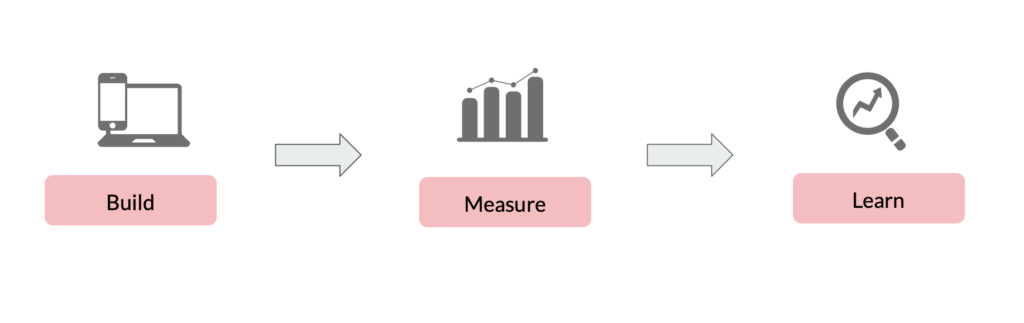
Lean Startup Methodology was introduced by Eric Ries and is practiced by most of the startups in Silicon Valley, startups in India and businesses across globe, while testing a business model or any hypothesis a brand wants to make a decision on. The Background: The Lean startup methodology is inspired from Toyota’s agile approach to manufacturing known as lean manufacturing. Taiichi Ohno, father of the Toyota Production System, used different principles to create Lean Manufacturing Systems, which helped to reduce assembly waste, minimise inventory throughout assembly line, identify gaps or imperfections in assembly line and get finished product out as quick as possible to test in the market. Lean Manufacturing is a process that values the ability to change quickly. What is Lean Startup Methodology? A lean startup method is a method used to found a new company or introduce a new product in the market, test it as quickly as possible, iterate it and discover if the product/business model is viable. The lean startup method advocates developing products that consumers have already demonstrated they desire so that a market will already exist as soon as the product is launched. Lean startup is a method which favors experimentation over elaborate planning, customer feedback over institution and iterative design/product releases over big design/product development. This methodology is not only applicable to companies who are introducing a product in the market, but it can also be applied to an established product/company to test different variants/features. Lean startup approach allows to learn quickly about your hypothesis, test it and iterate it from the validated learning & feedback. The concepts, “minimum viable product” (MVP) and “pivot” are practiced by many business to grow. What is Minimum Viable Product (MVP)? A minimum viable product commonly known as MVP is the version of a new product which allows a team to collect the maximum amount of validated learning about customers with the least effort. In other words, it’s a product with enough features, to attract customers to validate a business idea at the early stage of development. The goal of MVP is to test fundamental business hypotheses and begin the learning process as quickly as possible and enhance it. What is Pivoting? Pivot in startup world is is a structured course correction designed to test a new fundamental hypotheses about the product, strategy & engine of growth. Example Groupon: When the company was started, it was an online activism platform called the point. After receiving almost no traction, the founders opened a wordpress blog and launched their first coupon promotion for a pizzeria located in their building lobby. So know let’s go back to Lean Startup Methodology. 3 Stages of Lean Startup Methodology Let’s understand each stage in detail
WhatsApp for Business Case Studies

They say that a brand has etched its name in the good books of marketing when a brand name becomes a verb. The story of Whatsapp is one such example, where it has become a m household name. In a country with over 340 million users, India is Whatsapp’s biggest market. It was in early 2018 when this Facebook-owned company had launched Whatsapp for Business to bring a whole new dimension to the world of communication between businesses and their customers. As per reports by Whatsapp, India has over 15 million Whatsapp for Business users every month. In a world of instant messaging and short replies, Whatsapp for Business allows businesses to provide easy access to information to their customers and a much faster turnaround time. It is interesting to note that while Whatsapp for business was launched keeping the small businesses in mind, Whatsapp API is meant for medium and large enterprises with an ability to develop customizations and special features. So how does Whatsapp for Business work? Available free on the app store for download, few taps and verification of the phone number and tada! You have your Business account up and running. Its interface is similar to a non-business app. To get started, one needs to fill in all the details about their business such as description, address, email address and website for their customers to have a better understanding. There are a host of features such as catalog creation, broadcast list apart from the group chats and one to one chats, quick replies and the ability to automate responses. Besides, the businesses can leverage the rich media exchange feature which gives them the liberty to build interactive communication. Why businesses should leverage WhatsApp for Business Ease We will be scratching our heads to recall when was the last time we wrote an email to a company for a follow-up on an order, responded to an unknown phone call from a company or scrolled a website to share feedback. This is exactly where Whatsapp for Business becomes a perfect tool to be present where the customers are highly likely to be present. An average user opens Whatsapp 23-25 times a day. This gives a better opportunity for a company to engage its customers in an environment that is most convenient for them. At the same time, since Whatsapp verifies your business number, the customers are also assured that they are having a one-on-one conversation with a legitimate business. Besides, if your target group is relatively younger, it is a much better solution to have a presence on Whatsapp because this is the age group that prefers omnichannel communication and seeks instant gratification. Conversations Customers are more informed and appreciate real conversations rather than just receiving one-sided brand messages. With Whatsapp, a business gives multiple ways to engage your customers not just through plain simple text but with options to share and receive photos, videos, QR codes, documents, or location and that too with features such as end-to-end encryption and multilingual messaging. A well-crafted greeting message to set the initial tone, an option to set ‘away’ messages so that the customers are aware of the non-operational hours, instant query resolution are some of the ways, a business can keep their customers up to date without being intrusive. Engagement With a high reach and a high open-rate (70%), Whatsapp stands as a cost-efficient solution for small businesses. Businesses can segment the customers using a broadcast list feature, reach out to global customers in a cost-efficient way and strengthen relationships by personalizing the communication. Whether it is a new product or service you want to introduce, promote offers or share your business location for an outlet driven promotion, all of these can be taken care of in just one environment without having your customers look at multiple places for different communication. Building Trust As we saw earlier, end-to-end encryption assures customers of private and secured communication and at the same time the two-factor authentication adds another layer of credibility to the business. Adding further specifics to the business account such as website URLs, store address and social media links helps in strengthening your brand identity which acts as a familiar face for the customers instilling trust and confidence in your customers. Customer Service As per a survey done by Nielsen, it has been found that 56% of people would rather message customer service than talk on the phone. We can all agree that as a customer, we all need instant replies and quick fixes. Whatsapp plays an important role in this aspect as one of the ways that businesses can leverage is by capturing the query and contact number through different channels and reaching out to them directly by sending document guides or voice notes to navigate through their problem. One of the common trends seen for an e-commerce business is to share order status through Whatsapp, sending reminders for an incomplete website action, sharing receipts or even asking for feedback. The mere convenience drives the action and customers are in constant touch. Lets us see how some businesses are leveraging Whatsapp Food Ordering Here is an example of how KFC leverages whatsapp for business, customers can directly place order an order without going to the website or KFC mobile app Hotel Booking Here is an example of how OYO is leveraging whatsapp for business to allow customers to book rooms. Customers need to send a message mentioning their checkin date, checkout date and the location, the bot then asks for customers budget and then shortlists few hotels and shares with the customer, customer can then book the hotel to complete the chat. Loan Application Here is an example of how TATA Capital is leveraging WhatsApp for business for loans category, where the entire form is being filled through WhatsApp for business Customer Support Here is an example of how Balic is leveraging WhatsApp to offer customer support. Conclusion WhatsApp for business is gaining momentum and has also become
Startup Terms You Should Know
If you are starting up or trying to learn more about startups, you should know the below terms: 1. ARPU ARPU known as Average Revenue Per Unit is the measure of the revenue generated from per unit or per user. It is calculated as total revenue generated, divided by total number of units or users or subscribers 2. AOV Average Order Value (AOV) is the average value generated from each order. Formula for AOV = Total Revenue / Total Orders 3. CAC Customer Acquisition Cost (CAC) is the cost incurred to acquire a new customer Formula for CAC – Total Spends / Total No of Customers 4. Churn Rate Churn Rate is the rate at which the customers stop doing business with an organisation. It is the percentage of users who discontinue their subscriptions within a given time frame. 5. MVP Minimum Viable Product (MVP), is a concept from Lean Startup, that focuses on building a product with enough features to validate your idea. With the help of MVP, businesses can get feedback as quickly as possible and iterate the product. Most of the startups build MVP to validate their product.

