
Real Estate Investor Marketing

In today’s world of Digital, if you have the right strategy in place, the right tools and an iterative optimisation approach, you can raise funds quickly for qualified opportunity zone fund, fractional investment projects or any real estate project. I have been into real estate for more than 10 years, helping market projects and raise investments through retail investors from Digital Marketing. So far I have helped businesses raise more than $100mn across multiple projects. In this article I am going to discuss two projects to help you guide through my approach on how I do real estate investor marketing, and you can too. So let’s get started Real Estate Investor Marketing Case Studies 1. Raised $100mn for Qualified Opportunity Zone Fund Just to give you a background, Opportunity Zone is an economic development program created by the Tax cuts and Jobs Act of 2017 which allows retail investors to invest in distressed areas in the United States. For this project I was leading the performance marketing team, and I had studied the space when I did a small campaign with $5000 to target retail investors, and surprisingly we ended up raising $1.9mn, so this started the journey for the next project (project name confidential in Bay Area) Objective: To raise $100mn Strategy: Strategy is one of the crucial part which sets the direction to any real estate investor marketing approach, it combines of 3 key aspects and we defined these to Investor Segments:Here we defined different segments who would be potential investors we need to target to raise funds. These segments include Mass Affluent, HNW, UHNW, Wealth Managers & Family Offices. Defining segments helps us to understand them deeper, their investment behaviour and key aspects which making an investment decision Communication Strategy: In this step we defined the communication strategy which resonates with each investor segment, so that they sign up for the fund. In order to drive the communication strategy we went through different aspects including competition insights, investor insights, business proposition and market conditions. After defining the communication strategy, the creative articulation was done to run across different media channels. Media Strategy: In this step is defined which channel we want to use to target different set of investors, how much budget we want to allocate for which channel, what to expect from each channel, different experiments we are going to run and different metrics we are going to measure to define our next strategy. After defining all these aspects we were able to raise $100mn from all the sources, to access detailed case study, do go through our article How to raise $100mn for Opportunity Zone Fund through Digital Marketing 2. Fractional Real Estate Investor Marketing Case Study, 518% Growth Many real estate brands have ventured into fractional real estate investment opportunities for retail investors, one of the brand we worked with was AssetMonk and we helped them raise funds through Digital Marketing with 518% growth in FY 21-22 Objective: To create visibility of a project which was getting launched near Hyderabad Airport and raise funds from real investors, highlighting one of the best opportunity to invest Strategy: The strategy focused on the marketing funnel approach after doing intensive research about the fractional investment space, investor segments, competition insights and value proposition. The funnel based approach included creating different communication pieces for Awareness: We created teaser campaigns by creating different communication pieces to build curiosity of the project. Engagement In this stage we created investment humour based content to drive visibility, educate investors about the opportunity and different aspects associated with it. Below are few content pieces which we created Acquisition In the final stage we targeted different audiences based on interest in mutual funds, investing, stocks, gold & real estate investment through different channels, which helped to communicate our business proposition and drive investors into the funnel. Below are few creatives which were pushed to raise funds. To read detail case study do go through our article, Digital Marketing for Fractional Real Estate Investing Conclusion Real Estate Investor Marketing requires a deeper strategy from understanding the investors behaviour, business insights, communication strategy and media channels which can drive visibility and sign ups for the fund. If you looking for a real estate investor marketing agency or company, do reach out to us at R Interactives
Top 21 Tools for Experimentation

Adopt an attitude of experimentation and embark on a journey of A/B testing to grow your business faster. However, you need to create different variations of not only your website but also its elements and A/B test each version to find out the best-performing one that offers the best conversion rates. What is A/B Testing? A/B testing, also referred to as split testing, is a randomized experimentation procedure wherein different versions of a variable such as a web page, elements on the page, etc., are made accessible to different segments of visitors to the website at the same time. This helps the website owner to determine the version that creates not only the maximum impact but also drives business results. Essentially, it helps to eliminate all conjecture as regards website optimization. Besides, it enables optimizers in making data-backed decisions. In A/B testing, while A refers to the control or original variable, B refers to a variation or version of the same variable. The winner is the version that drives the business outcomes in a positive direction. Implementing the winning version on the website for all of your target audience hastens the process of optimization and increases the ROI. Why Should You Do A/B Testing? A/B testing is one of the key aspects of the conversion rate optimization (CRO) process. It helps you gather both quantitative and qualitative insights about your audience such as their behaviour, engagement rate, pain points, etc. The three main reasons for doing A/B testing are improving: Product discoverability In the product discovery phase, you would want to test ideas and hypotheses quickly. In such a situation, the best option is to perform client-side A/B testing as you get to know the outcomes the very next day. Product discovery adds value to the company, product team, and customers by delivering something that they consider important for them. Furthermore, you can save valuable resources by pursuing only the development of products that your audience wants. As A/B testing enables the product discovery process, you can be sure that you are on the right track. User experience A/B testing is useful in researching and understanding aspects related to user experience. In fact, large social media platforms such as Facebook, LinkedIn, and Instagram employ A/B testing to improve user experiences and streamline their services. A/B testing helps you understand how even small changes can impact user behaviour. It also helps you decide the design to be implemented and confirms whether a new design will work or not. This means A/B testing can be used for how your product’s different elements are impacting user experience. Tweaking these elements helps to increase your conversion rates. Conversion rate If the visitors coming to your website are leaving quickly, then performing an A/B test on the copy, headlines of your blog post, images, etc., helps you to clearly understand the best way in which you can catch the attention of your visitors. This reduces your bounce rates. With A/B testing, it is easy to figure out the kind of content that enhances conversion. In short, this marketing tactic can be used to determine what works with your target audience and what doesn’t. A/B Testing Tools A wide range of A/B testing tools is available today. However, it is important that you identify ones that can help you improve conversions and customer experience across your digital properties. Having said that, here is a list of A/B testing tools that you can experiment with: #1: Google Optimize Each user is different and you need to cater to their individual requirements. Optimize allows you to try out different website variations to find out how they perform against an objective specified by you. This enables you to ensure an optimal experience for each of your user groups. Besides, the A/B testing tool helps you identify the variant leader. Pros Google Optimize is free to use It is easy to use It is integrated with Google Analytics Cons Can’t upload new images as the free tool does not allow storage of large amounts of data Doesn’t allow the use of Google Analytics segments Only 5 tests can be run at a time with limitations on goals and multivariate testing Pricing Free A/B testing tool. #2: Adobe Target Adobe Target, an experience cloud solution from Adobe, provides everything that you need to personalize your audiences’ experiences. It helps you maximize revenues from your mobile and websites, applications, social media platforms, and other digital channels. The AI-powered testing tool allows you to evaluate user experience. With this tool, you can find one customer from a million and provide them with what they want. Pros A/B testing can be done via a visual composer Integrated with Adobe Analytics and provides robust reports Allows powerful segmentation to conduct targeted tests based on multiple personas and factors Cons Training needed to effectively use the powerful A/B testing tool Limited native reporting capabilities Integration with Adobe Analytics ‘A4T’ is needed to generate robust reports Support available only for off-shore ticketing system Pricing $29.99per month per license #3: Optimizely Optimizely is a digital experience platform available as Software as a Service. The tool enables A/B and multivariate testing, website personalization, digital commerce, and web content management as well as offers feature toggle capabilities. Pros Enables the development and building of new website content Helpful in organizing website architecture Helps identify issues and resolve them quickly Enables effective media assets management Helps deliver experiences in agile, dynamic means Cons Enables customers to create new templates Template, block, and functionality changes are expensive Management of URL redirects or generation of batch redirects during major architectural improvements is not very efficient Language translation is cumbersome #4: VWO Visual Website Optimizer (VWO) is a tool that enables marketers, product managers, and analysts to conduct A/B tests and geo-behavioural targeted campaigns. With VWO, you can create and test multiple versions of your website and find out which version is the leader. The results of tests can be validated through
19 Top Shopify Apps to Drive Sales & Retention

In this article I will discuss 19 Shopify apps that would help to boost sales & retention on your Shopify store. There are thousands of app solutions in the Shopify store. Browsing through them would take a lot of time. Therefore, I have listed some of the essential Shopify apps that would help you address some of the challenges that you face as a merchant during your journey in association with Shopify. Shopify Apps – The value they bring to the users Millions of people across the globe use Shopify to manage, run, and scale their businesses. Many others build apps that help these business owners to overcome unique challenges that come up. Apps are an indispensable part of the journey for the merchants who use Shopify. The rapidly changing digitization, emergence of new and disruptive technologies, and the diversity of the merchant base has forced the emergence of apps that provide creative solutions. There are apps that help in every step of the merchant’s journey, from sourcing products, to marketing, order fulfillment, customer management, and more. So let’s dive deeper on few apps #1: Hubspot for Shopify Features The HubSpot integration for Shopify works to improve inbound traffic, constituting both paid and organic. In addition to allowing your Shopify store to connect to HubSpot, it allows the analysis of the Shopify data to produce reports, sync products, contacts and orders automatically from Shopify to HubSpot, segment contacts on the basis of products, and automate ecommerce campaigns. With the help of Hubspot Shopify app, you can Analyse key metrics including abandoned cart recovery, customer lifetime order value Free Trial You can request for a free demo of HubSpot for Shopify. The integration comes with a 14-day free trial. You can continue with paid options. Pricing The integration with HubSpot requires the below-said Shopify subscriptions. Basic Shopify – USD 29/month Online Store Sales channels Staff accounts 24/7 support Plus more! Shopify (for a growing business) – USD 79/month Everything in Basic, plus Gift cards Professional reports Shipping discount up to 72% Plus more! Advanced Shopify (for scaling your business) – USD 299/month Everything in Shopify, plus Advanced report builder Third-party calculated shipping rates Shipping discount up to 74% Plus more! #2: Seguno Features This app has been built as an email marketing platform, exclusively for Shopify. Some of its features are: Build and send engaging emails using 150+ templates Encourage growth of your list with Seguno popups Email automations to save time Continued support from experts Free trial The app has a 10-day free trial. Pricing Plan 1: – 0 – 250 subscribers FREE Unlimited emails Newsletters, automations Live chat/support Plan 2: 251 – 1,000 subscribers – USD 10/month 10-day Free trial + $10/mo/extra 1,000 subscribers All premium features available such as: Product-purchased automations Multi-email automated series Remail to non-openers Customer-tagged automations The payments can be done month on month via Shopify. #3: Nudgify This is an app that helps to increase trust as well as sales with FOMO nudges and social influence. It turns any data into social proof, showcases the best reviews, and increases conversions. Features Shows recent conversions/sign-ups and increases trust Shows real-time stock data with an automatic feed Automatically displays new sign-ups Readymade and configured Nudges for e-Commerce/ SaaS/travel and more Make new customized Nudges with words and pictures Decide pages and devices on which your Nudges should appear And more! Free Trial You can try Nudgify FREE for 7 days and then pick up a plan. You can use Nudgify for any nymber of websites. There is no need for credit card details to be provided. You can opt for an annual billing mode and save up to 67 percent. Pricing Plan 1: AGENCY USD 89/month For large websites/agencies having multiple websites and lots of traffic 1,000,000 Visitors Social proof & FOMO 32 languages Plus more! Plan 2: GENIUS USD 29/month For SaaS and e-Commerce websites requiring advanced settings and options 100,000 Visitors Unlimited Websites 32 languages Plus more! Plan 3: PLUS USD 9/month For bloggers/new businesses that require real-time Social Proof and FOMO 10,000 Visitors 32 languages Social proof & FOMO Plus more! Plan 4: LITE USD 0.99/month To increase your sales and sign-ups with real-time Social Proof 2,000 Visitors Unlimited Websites Basic social proof 32 languages #4: Dialogue Features It is created to make personalization easy. It helps to boost sales, drive conversions, and create personalized shopping experiences effortlessly and quickly. The personalization engine promotes campaigns that work best automatically and generates new ones based on relevant performance by users. Powered by machine learning, the app is fully automated. Free trial It is FREE to install. Pricing Paid plans are available. You can pick up any paid plan that suits you. The pricing depends on the plan that you choose. #5: Pushowl This app helps you to capture anonymous shoppers as subscribers with web push notifications for your ecommerce site. However, they need not provide personal details. Some of them end up as buyers. Features Improve visibility by using push notifications sent straight to customers Reach a wide audience by sending notifications to their phones Revenue analysis for notifications Spot the high-performance notifications Modify remarketing strategy by studying customers’ interactions with the notifications Free trial You can sign up for free. Pricing Plan 1: BASIC – Forever Free – 0 USD/month 500 Impressions per month Unlimited Subscribers Plus More! Plan 2: BUSINESS – (Most Popular) – USD 19/month 10,000+ Impressions per month All Basic Features Plus More! Plan 3: Enterprise – Customized plans All the Features of Business Subscriber segmentation Flash sale Plus more! #6: Smile This app features easy to implement reward programs for Shopify. Loyalty programs usethree different methods for rewarding shoppers: Points, Referrals, and VIP. Features Email Notifications Customizeable displays Social media actions and reward shopping Connect different reward programs Free Trial You can sign up for free. Pricing Plan 1: Free – 0 USD/month 200 orders/month Plan 2: Starter – USD 49/month For entrepreneurs wanting set up a professionally-branded reward program. Plan 3:
Master Guide To Customer Adoption
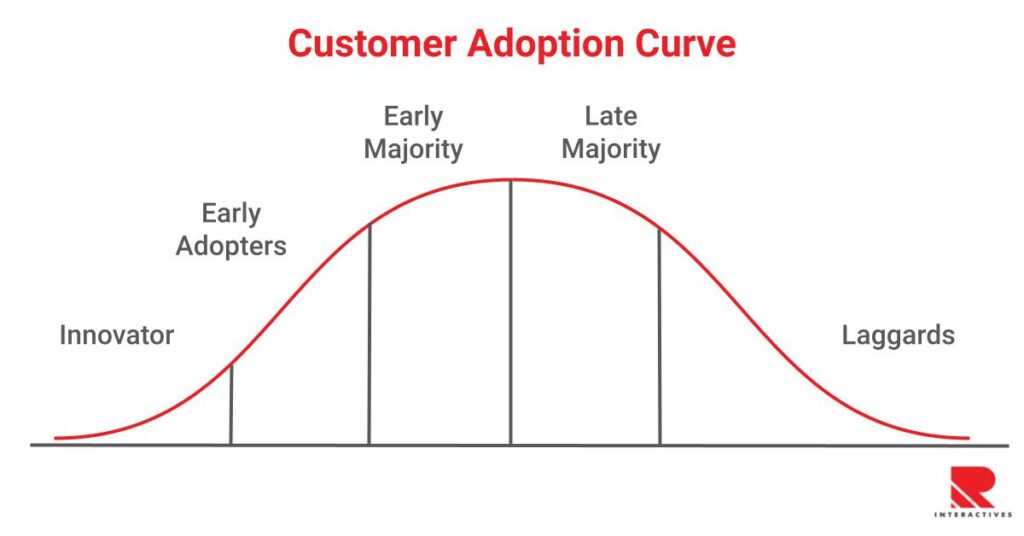
If you are starting a new online business or a startup or you are an existing business & have introduced a new product, you would want your customers to buy or upgrade at the earliest. In short, you want them to quickly adopt your product or service. That’s all that is there for customer adoption, but you will have to help your customers to hasten the process and achieve desired outcomes. In this post, we will discuss various aspects related to customer adoption in detail. When a startup launches a new product, they are looking for customer adoption, so the initial set of customers are going to decide whether the product would be accepted or not, so let’s understand customer adoption in detail What Is Customer Adoption? In simple terms, customer adoption refers to the process employed by a business that introduces a new product or service for the consumption of its target audience. It enables the company’s existing and potential customers to adopt and acquire the product or service. It comprises various aspects right from the moment the company’s audience becomes aware of the newly introduced product or service to the time they integrate the same into their lives. This means that your customers need to be guided through a period during which they consider your product and until they reach the stage of actually adopting it. This also means that you need to have a clear understanding of the customer adoption lifecycle in order to ensure that the process is smoother and you achieve optimum user adoption ratios. Now, before any discussion on how you can improve the customer adoption lifecycle, it is important to understand the customer adoption curve. Customer Adoption Curve The customer adoption curve can be considered a tool that businesses can use to classify their audience into different categories. This is done on the basis of their interest in new technology and ideas. Using this tool, your audience can be categorized into five types: 1. Innovators A few of your target audience will be ready to take risks. They are referred to as innovators. They are people who think outside the box and willingly buy your newest product or service and makeup 2.5 percent of the population. Typically, they don’t wait for the new product or service to be proven and often come up with their own ideas. 2. Early Adopters Early adopters are comfortable taking risks and are often trendsetters. They use a product or service to form their own opinion and then promote its use. They are often the first people to know about a new product or service. The aspect that separates early adopters and innovators is the former’s concerns regarding their reputation. Innovators don’t mind failing publicly. The traits of an early adopter include persuasiveness, a willingness to work through bugs and initial setbacks, and concern about their reputation. Approximately 13.5 percent of your audience belongs to this category. 3. Early Majority As much as 34 percent of your target audience belongs to this category. This category of people will be logical, practical, and data-driven. They are interested in new products and services but need proof that they are effective. These people scour product reviews before making a purchase. Furthermore, they quietly conduct some research before committing. You need to formulate a pragmatic approach to convert them into your customers. 4. Late Majority Thirty-four percent of your target audience can be included in this category. They are logical and cautious people, and they don’t like to take any kind of risk. Like the people belonging to the early majority category, these people will look for a data-driven reason to buy a product or service. A lot of effort may be required to convince people who fall into this adopter category. You will have to provide solid proof that the product or service is worth trying out. 5. Laggards Laggards constitute 16 percent of your audience group. They are skeptical, resistant to change, and exercise great caution when it comes to buying new products or services. Before getting on board, laggards need to know how they will benefit. This category of people prefers to maintain the status quo because there will be no uncertainties. They are stubborn users and get frustrated easily. What are the Different Customer Adoption Metrics to Look At? In order to improve customer adoption, it is important to measure certain metrics. Adoption monitoring is beneficial in obtaining product feedback as well. In addition to looking at just the adoption of your whole product or service, you get insight into the specific features that your users like. This will be of great help to your product and sales teams. Furthermore, measuring adoption also enables you to ensure that you are achieving business goals you are looking at The three key metrics related to customer adoption are: #1: Adoption Rate The adoption rate is calculated as follows: This is the most basic metric as far as adoption is concerned. However, it is very useful baseline data that comes in handy. For example, if 250 users out of the 1,000 you currently have buy your new product, your adoption rate is 25 percent. This metric can be used to measure the adoption of not only your whole product but also a specific feature. Furthermore, the adoption rate is generally calculated for a specific time period. #2: Customer LifeTime Value (CLTV) Customer lifetime value (CLTV or CLV) is another key statistic to track to better understand customer adoption. CLV measurement helps you understand the value of a customer to your business, not on the basis of each purchase but over the period of their relationship with your organization. This is an important metric because it highlights the fact that it costs less to retain existing customers rather than acquire new ones. This is to say that increasing existing customers’ value is one of the best ways to drive growth. Therefore, knowing the CLV allows you to implement strategies to not only
Top 5 Programmatic Advertising Agencies in Dubai
Dubai is one of the emerging markets where brands are looking for specialised digital marketing & programmatic advertising agencies to market their products & services across different regions through different channels. There are different programmatic agencies in Dubai, but the key question is which to choose from. In the article we will understand what are the different criteria’s which you should look at while choosing a programmatic agency, and which are the top one’s Factors to Consider While Choosing a Programmatic Advertising agency? 1. Case Studies The first thing to look at is what are the different programmatic case studies which they have built while working with different clients. This will help you to understand their approach, their expertise and execution methodology. 2. Partner Brands What are the different brands they have worked with. Look for companies who have vast experience who has worked with multiple industries. If you are looking for a specialised agency in a particular domain, check which agency has worked extensively in a particular domain, as they would help to market your brand/products/services better. 3. Leadership Team While evaluating an agency, look at the founding & leadership team, what education background they have, what companies they have worked with, their tech background & marketing background. This will give you confidence to onboard them Let’s now look at the best Programmatic Advertising Agencies in Dubai & Middle East 1. R Interactives R Interactives was founded in 2018, it is a growth marketing, programmatic advertising & digital marketing agency. They use data intelligence to understand consumer behaviour & design bespoke communication pieces, that leads to powerful actions, resulting in higher visibility & brand engagement Services: Programmatic Advertising, Dynamic Creatives Optimisation, Digital Advisory, Performance Marketing, Experimentation, Fundraising & Search Engine Marketing Partner Brands: Zee, Hotstar, Flipkart, VOOT, Fast & Furious, EFD Induction, Mitsubishi Electric, Netafim, NBC Universal & more Contact: Email: rahul@rinteractives.comPhone: +971 543687872Location: Dubai & Abu Dhabi Case Study: Flipkart Dynamic Creative Case Study for Programmatic Ads Article – Dynamic Creative examples for Programmatic Ads 2. Alwafaa Group Alwafaa group offers programmatic solutions in Middle East and GCC. Services: Ecommerce Website Development, E-commerce App Development, Programmatic Ads, Snapchat Marketing, Twitter Marketing and more Partner Brands: Color Land Toys, Leaders Sport, Top Perfumer, City Pharmacy, SKMCA, One Go, GBOX and more Contact: Email: info@alwafaagroup.comPhone: +971 426 369 36 3. Eds EDS is a team of digital media experts delivering online business solutions and exceptional digital marketing results. Services: SMS Marketing, Email Marketing, Programmatic Advertising, Affiliate Marketing, Whatsapp Marketing and more Partner Brands: No mention of client names on the website Contact:Email: info@edsfze.comPhone: +971 4 5193444 4. Global Media Insight Global Media Insight is a Marketing & Content production agency, its portfolio covers plethora of projects covering the entire length & breadth of digital. Services: Web Design & Development, Online Advertising, Video Production, Web Analytics, Social Media Marketing, Programmatic ads etc Partner Brands: Alpaha Aviation Academy, Antonio, Technal, Fischer & more Contact:Email: info@globalmediainsight.comPhone: +971 569683737 5. Adapts Media Adapts Media offers digital solutions for brands in the MENA region. Services: Creative Designing, SEO Services, Social Media Marketing, Programmatic Advertising, Market Research, Programmatic ads and more Partner Brands: GREE, Kaercher, Redington & more Contact:Email: info@adaptsmedia.comPhone: +971 58 560 1701 Conclusion While choosing a programmatic advertising agency or digital marketing agency do make sure you look at the above factors, it will help you to evaluate different agencies and choose the right one!
9 Lead Nurturing Strategies To Boost Sales
What is Lead Nurturing By lead nurturing we refer to a process that you can follow to build and maintain relationships with potential clients. By relationships, what is meant here is simply not one that is built based on a template. Meaningful lead nurturing requires time, effort and dedication. Only a thoughtful approach which stretches over a considerable period can help to nurture a lead. Lead nurturing is an important step in lead management. A part of lead nurturing also spreads into educating the to-be-customer about your products/services and how it can solve their problem. Lead nurturing is a process that involves both the sales and marketing teams of your organization. It revolves around not only your sales targets but also your customers’ needs. Why Lead Nurturing Is Important? Lead nurturing is important because it is a proven tactic to drive high-quality opportunities into the sales pipeline. Some important derivations of using lead nurturing are: 1: Helps to Build a Relationship with the Customer Lead nurturing is a process by which you can build relationships with your prospects so that you can earn the business they will bring when they are ready. This marketing effort is focused on engaging with your leads and customers in a way to build relationships with them and therefore encourages them to move toward a specific action. 2: Increases Average Order Value (AOV) An Annuitas research study points to the fact that nurtured leads stand a 47% higher chance of bringing higher average order value than deals that are not nurtured. Therefore, if you’re looking to generate higher order values, building stronger relationships with your buyers via lead nurturing 3: Reduces Customer Acquisition Cost Customer acquisition costs include the sales and marketing costs and other operational costs that are incurred for acquiring a customer. The customer acquisition process includes lead generation. However, lead generation refers to bringing new people into your funnel, customer acquisition focuses is the process of moving these leads through the buyer journey. Lead nurturing strategy can help you to nurture leads that did not convert when you acquired them. The costs are inherently reduced when you use different lead generation strategies which influences the decision of customers. 4: Shortens the Sales Cycle Modern customers take more time to explore their buying options and to educate themselves, before making a decision. As a result of this, today’s sales cycles are longer, and this is the reason why it is important to nurture leads. Lead nurturing also involves educating your customers about the products and services that you can offer and how they will help them solve their current challenges. This helps customers to make more informed decisions, allows your business to adapt to the new environment, and shortens your sales cycle. This may give you a better chance of converting more leads into buyers and long-term customers. 5: Builds Loyal Customer Base The basic premise of lead nurturing is the process of bringing in leads that are not ready yet to buy. Successful lead nurturing looks into the needs of the buyer, based on their profiles (using characteristics, such as title, role, industry, and so on) and where they are located in the buying process. If a positive relationship is the result of lead nurturing, which is all about building relationships with would-be customers, they will likely be loyal customers once they decide to buy. 6: Increases Customer Lifetime Value (cLTV) Customer lifetime value (cLTV) is a useful metric that indicates what a business can earn from a customer over the entire course of their relationship. Though lead nurturing is the first step in the customer acquisition process, this should last well past the first step in that it should help create a loyal customer base. Customers should be informed about a product when their needs are high. This gets them to buy and by imparting knowledge about the product as part of the led nurturing process, the CLTV is likely to become and stay high. 7: Upsell and cross-sell Lead nurturing is the process of developing on-going relationships with to-be customers at every stage of the sales funnel. It involves personalised communication being sent to the customers based on their behaviours and activities. If you are dealing with former customers, lead nurturing helps to improve that specific customer’s awareness of your company’s products/services and the latest offers. Studies indicate that lead nurturing allows for bigger deal sizes. Because of this, there is potential to enhance the number of sales and the value of the sales. It also allows you to discover more up-sell and cross-sell opportunities to your customers. How to Create an Effective Lead Nurturing Strategy? Creating great relationships with customers and maintaining them is the success mantra today for any business. Being present on the media channels where your customers are present and making an effort to engage with them heightens the chances of developing and maintaining relationships with them. Statistics have it that only close to 35% of B2B marketers are ready with a lead nurturing strategy. So if you have one, you are likely to have a competitive advantage. If you do not yet have a lead nurturing strategy for your organization, now is the best time to get started. This takes both time and effort. 1. Segment the audience based on customer persona It is common knowledge that it is difficult for a business to survive without a steady stream of qualified leads. It is equally important to nurture to-be clients through every stage of their buying journey. In any inbound marketing, it is important to know who your leads are, what their problems are likely to be and how your product/service is going to help solve that challenge. This is where customer personas become important. As it is difficult to create content suitable for every individual lead, it is practical to segment leads into groups having similar characteristics. Then you can create content that aligns with the needs of that group. A Segmented persona
How to Raise $100mn for Opportunity Zone Fund Through Digital Marketing
Having led performance marketing for multiple fundraising campaigns of Real Estate Opportunity Zone Fund (Ozone fund), Real Estate Fractional Investment and Crypto Ethereum & Bitcoin Fund, I have been able to dive deeper in different investor segments and what influences their decision to invest in the fund. In this blog, I would be discussing how we raised $100mn for Ozone Fund for a Bay Area real estate company, where I was leading the performance marketing strategy & execution team to acquire investors Everything started when the client wanted to market one of their opportunity zone fund with a small budget of $5000 to see if they are able to get any investors in the funnel, I did some research about the audience & opportunity zone space to understand who would be potential investors, I learnt that there is a potential in the space as Opportunity Ozone fund is an attractive investment opportunity with tax benefits. After spending $5000 you would be surprised to know that we raise $1.9mn 🙂 This kickstarted the journey for our $100mn Opportunity zone Fund campaign, let’s understand in detail (Client name & strategy is confidential) To begin with let’s understand about Opportunity Zone What is an Opportunity Zone? Opportunity Zone is an economic development program created by the Tax cuts and Jobs Act of 2017 which allows retail investors to invest in distressed areas in the United States. The key purpose of this is to spur economic growth and job creation in low-income communities while providing tax benefits to people who invest in the Opportunity Zone fund. Taxpayers can also invest in these funds through Qualified Opportunity Funds (QOF) Opportunity Zone Fund is also known as Ozone Fund Taxpayers can invest in these zones through Qualified Opportunity Funds. What are the Tax Benefits of Investing in Opportunity Zone Fund? Now that we have some background about Opportunity zone, let’s get in understanding How to Raise $100mn for Opportunity Zone fund 1. Defining Investor Personas The first step is to understand and define investor personas who would be the potential investors we need to connect with to showcase Opportunity Zone fund opportunity. This will also allow you to target these personas and also define specific messages to each persona. The investor personas would include Tech HNW, Non-Tech HNW, Wealth Managers & Family Offices. We defined each persona to understand how they are, what they do, how they research, their investment approach and key factors they consider while making a decision. You can also do this by creating an investor persona including all these pieces. Above is a simplified example of creating investor persona, you should go as deep as you can to learn more about each persona To learn more about how to create customer persona, please read article, An Ultimate Guide to Customer Persona 2) Defining Communication Strategy The next step is to define the communication strategy. Having an effective communication strategy helps to communicate key message of the campaign, connect with the audience and influence their decision. We defined an impactful communication which resonated with each persona to create awareness, engagement and drive them into the funnel. This strategy was defined after going deeper into below aspects Communication Objective: Define what is the objective of the communication, is it to drive awareness, generate interest, engage or convert. This will help you to craft your communication better aligned with your objective. Competition Insights: Always try to understand what your competition is communicating through their advertising campaigns, this will help you to avoid similar thought of line while creating your campaigns, plus it will also help you to understand what space they are trying to capture. Investor Insights: One of the most valuable aspect is to learn from investor data, their investment approach, their goals, their demographics and psychographics, which will help to make specific communication for different segments. You can also do surveys or interviews, to understand investors methodology for making investment decisions. Business Proposition: Clearly define what is the business proposition, why would anyone invest in the fundraise, why it’s a lucrative amazing investment opportunity. Defining these pieces will clearly help to you push on different aspects of the business which would influence decision of the investors, eg: high IRR, algorithmic trading, managing downside, capturing upside, protection and more. Market Conditions: Understanding the current market situation is important, because the market might be going down and you are trying to market your fundraise, so what is going to be the investor mindset, will they invest or watch, is something to be looked at Historic Data: It’s always good to learn from historic data, historic data helps to understand what has worked and what hasn’t, it also helps us to understand the impact of earlier communication. So it’s a effective practice to learn from historic data and learn form it. Based on the above aspects we crafted different sets of communication for different stages of the investor journey specific to each segment, making it more relevant and impactful. 3) Defining Media Strategy The next step is to define the media strategy. We defined media strategy based on below aspects to drive value from media investments. Let’s understand each in detail Communication: That’s the key message which you would be communicating to your audience. We defined segment specific communication which helped us to connect with the investors better, generating maximum traction from the campaigns. Targeting: This is one of the key aspects in the entire media strategy. We defined targeting for each segment at a deeper level, which helped us to reach out to the right audience with effective communication. Further, we also created different list of companies where the investors were working and targeted them. If the targeting is not precise you would end up investing media on irrelevant audiences and see lower traction. Channels: Channels include which platforms and properties you would be using through your marketing campaign, eg: Search, Display, Programmatic, LinkedIn, Twitter, Email and more. Based on different segments we decided which channels
Shopify New Features To Lookout for in 2024
Shopify is one of the main online business software platforms utilized by many organizations universally. It is seemingly the greatest internet shopping platform working today. Amazon might be sovereign in the online retail industry, yet Shopify is more adaptable, offering more different choices for the internet-based vendor. Amazon is more of an online marketplace that presents virtual space for sellers alongside other sellers; Shopify allows individuals to develop their online store from the beginning. The subscription-based platform facilitates users to establish a website to market their creations online. From an introductory store for small companies to a fully custom-made on-brand website for big enterprises, Shopify permits its users to customize the shopping experience of their consumers. It even delivers its point-of-sale app for firms to use with their physical shops. It is not startling, then, that many significant brands and businesses use Shopify for their online stores. New Shopify Features You Need to Include Today Reports uncover that Shopify holds 23% of the overall market share by facilitating 1 million top eCommerce stores. Features like usability, versatility and completely safe exchanges make Shopify a famous platform to have eCommerce websites. Cart2Cart migration statistics uncovered that a greater part of eCommerce owners relocated to Shopify in 2019. Furthermore, this pattern is supposed to go on in 2024 also. Are you still questioning why you should shift to Shopify in 2024? Here are a few new features that will help you make a better decision. 1. Buy Now, Pay Later Shopify has officially launched Shop Pay Installments — a buy now, pay later product particularly developed for Shopify vendors. By starting Shop Pay Installments, vendors unlock considerable advantages, such as – Permit to one of the biggest consumer networks of any buy now, pay later provider through Shop Pay, an accelerated checkout procedure, and Shop, a shopping assistant app. A consistent checkout experience with higher conversion and order values. Direct reconciliation of Shop Pay Installments with their Shopify stores. Transparency that forms entrust with purchasers. Through Affirm, Shop Pay Installments assists vendors to give purchasers expanded adaptability and affordability at checkout. 2. 0% Revenue Shares from Shopify Developers Since August 1, 2021, application developers can register for a reduced income share plan. Shopify collects 0% on the initial 1 million USD in yearly gross app revenue procured through the Shopify App Store and when you surpass a million USD every year you could pay 15% rather than the past 20%. 3. B2B on Shopify No question beginning a B2B store on the web, or moving a current offline business into the online world, is an overwhelming task. There’s a great deal to consider and a ton to do, however, there will never be a really interesting chance to get your Shopify B2B store begun. Many individuals moving into online B2B put their confidence in Shopify. The web’s number 1 online business platform declared their aim to help B2B organizations by laying out Shopify Plus in 2014, and its outcomes since have been amazing. The following is a short glance at some of what Shopify brings to the table in the B2B market – Incredible for hosting and scaling – The service flaunts 99.99% uptime and can deal with essentially any measure of traffic tossed at it. Extraordinary personalised assistance – Shopify gives customized set-up masters who help new Shopify B2B storekeepers to begin including transitioning formidable waves of offline B2B data into digital format, constructing a store’s plan and assisting you with laying out business objectives. Automotive procedures – Shopify Plus unquestionably assists B2B organizations with capitalizing on their assets. Nearly all that can be mechanized on your discount Shopify store is automated, including stock restock, new item indexing and monitoring your purchasers’ progress through their purchasing process. 4. Tokengated Commerce As a component of another series of connect-to-consumer drives, Shopify permits merchants to interface with fans and drive deals by making elite products for tokenholders. The drive, named “tokengate”, is accessible in early-access beta mode. To get everything rolling, merchants can make a tokengate shop straightforwardly on the Shopify application or add the component directly in-store. Purchasers then, at that point, need to interface their crypto wallet and confirm they are owners of non-fungible tokens, or NFTs, to shop gated products or access selective occasions. The feature fills in as a door between FT people group and consumer brands on the platform. What’s more, sellers can cooperate with different brands for upcoming NFT drops and collaborate with Shopify’s marketing accomplices to foster premium items. Besides, sellers can mint custom NFTs on famous blockchains like Ethereum (ETH), Polygon (MATIC), Solana (SOL) and Flow (FLOW). Subsequently, they can list and sell them right from their store. 5. Shopify Markets Shopify Markets is a cross-border management tool that assists you with recognizing, setting up, sending off, improving and dealing with your global business sectors – all from a solitary store. Shopify Markets concentrates worldwide selling instruments for your business and acquaints new efficiencies to help you manage and extend your worldwide deals. With Shopify Markets, you can make custom online shopping experiences for various purchaser sections. You can do this by making markets that target particular nations or areas, or you can assemble nations and locales to improve on your expansion measures. 6. Twitter Sales Channel Twitter has collaborated with Shopify to give vendors in the US a simple method for utilizing the informal community to develop their business. Traders can now add a Twitter sales channel application to their Shopify administrator dashboard to get to a supervisor where they can see the interpersonal organization’s shopping tools and features. That sales channel automatically and routinely synchronizes with Shopify merchants’ indexes, so clients will not need to stress over a updating item data on numerous stages. That will make it manageable for dealers to showcase their items through Twitter’s Shop Spotlight, which is a committed space at the top of a profile that can show up to five things. Guests to a vendor’s account
17 Best Project Management Tools
Project Management Tool is software that representatives can use to deal with different hierarchical errands that accompany having some work as a project director. This incorporates task arranging, change management, scheduling, and resource allotment. Project managers, group leaders, and managers can utilize this sort of programming to control financial plans, the nature of work being created, and handle administrative errands. Many groups also use project management tools to assist them with keeping in contact with one another, as well as their project chiefs and partners. Advantages of using a project management tool These tools permit you to smooth out your work processes, delegate assignments with only a couple of clicks, and finally let you tackle that enormous task without feeling overpowered from the moment you get it. 44% of individuals guarantee that they do not utilize a project management tool to make their deadlines noticeable. This shows a significant opportunity for entrepreneurs to support productivity in their organizations by using project management tools to explain deadlines, so projects and tasks are finished on time. So now that you’ve distinguished that the project management tool plays a pivotal part in your business, we should examine the 16 best project management tools. Best Project Management Tools 1. Asana Asana combines project management, file storage, and collaboration and helps manage projects across a team without email. Pros of Asana – Tasks and team assignment Projects roadmaps and timelines Milestones and team progress File and track bug reports and sprints. Project dashboards to get a quick overview Cons of Asana – No multi-person tasks UI delays Heavily text-based No time tracking and estimated functionality Pricing – Free for up to 15 members, paid plans from $13 user/month. 2. Trello Trello is comprehended for envisioning project tasks on a cardboard-like dashboard that’s excellent for handling short and quick everyday tasks. Pros of Trello – Simple task management on a cardboard Creating unlimited task lists Image and file sharing Organizing lists by dates or priority Commenting and collaboration Cons of Trello – Crowded and cluttered No time tracking & estimate functionality No overview Pricing: Free for individual use, $9.99 user/month for businesses 3. Teamwork TeamWork projects is a highly user-friendly project management tool that’s effortless and has an incredible eye-catching design. It enhances team collaboration and helps creative teams to organize their work and tasks. Pros of TeamWork – Gantt charts Time tracking Task lists with sub-tasks Milestone management Comprehensive user permissions Reporting Cons of TeamWork – Tedious Can be overwhelming Pricing: From $12 user/month 4. Podio Podio is a flexible and positively customizable online assignment and team communication hub. Pros of Podio – Delegate tasks, attach files, and discuss attributes within the solution Transfer encrypted & large files Automate the sales channels and project budget tracking Get a summary of the company with a visual dashboard Cons of Podio – Can be confusing No time tracking functionality Pricing: 19.20$ month/user for a full suite of attributes 5. Wrike Wrike keeps all users in the loop with custom-made desktop notifications, so if anything is updated, modified, or added to a task, all users within that assignment get a message. It also combines with your email and makes it incredibly easy to tag or email other users about a job or project. Pros of Wrike – Easy collaboration Seamless integration Multi-projects assignment Gantt charts Cons of Wrike – Tasks are challenging to break up Cluttered 6. ProofHub ProofHub offers a substitute for traditional emailing and many other tools, incorporating multiple project management attributes under one roof. Pros of ProofHub – Assigned user roles Online team discussions and chats Task delegation and assignments Reporting and tracking project history Secure file storage Cons of ProofHub – No budgeting function No option for recurring tasks Pricing: From $45 month 7. Workzone Workzone was created by professional ad executives who desired to help agencies and creative teams get visibility into all of their assignments. Pros of Workzone – Personalized, personal to-do lists Construct subtasks and task dependencies Set authorizations for specific users (including clients) to access assignments, tasks, and files Quickly see positions with Gantt charts Allocate people to more than one task Cons of Workzone – Login problems Problems with app store listing Connection issues Compatibility issues Getting errors Crashes reported Buggy Pricing: From $24 user/month 8. Zoho Projects Zoho Projects is one of the renowned tools for manageable project management that can support teams in streamlining their forthcoming work and tasks. Pros of Zoho projects – Task lists with multiple tasks and milestones Time tracking and timesheets Gantt charts to oversee project progress Document and file management Cons of Zoho projects – Searching for tasks needs improvement. Bug reporting needs work Poor dashboard functionality High learning curve Pricing: From $5 user/month 9. ClickUp ClickUp is a project management platform that’s concentrated on efficient task management. Constructed for teams of all sizes and industries, ClickUp’s fully customizable attributes make it a must-have for agile teams that want to maintain everything from design to development in one intuitive place. Pros of ClickUp – Three different views (Board, Box, List) Assign comments 52 customizable features for each project Refined hierarchy to keep tasks simple as they expand Instruments like ‘Smart Search’ and ‘Smart Estimates’ make you more productive over time Cons of ClickUp – Too many ClickUp features Too many options for customization UI needs improvement Pricing: Free for up to 100 MB and Premium plan for $5 user/month 10. Smartsheet Smartsheet is an online work performance platform for organizing and automating collaborative work. Pros of Smartsheet – Project plans and schedule Program roll-ups Resource management Budget tracking Strategic planning Cons of Smartsheet – It’s pricey No time tracking Pricing: From $25 user/month for teams 11. Celoxis Celoxis is an all-in-one platform for project portfolio and work administration. Pros of Celoxis – Advanced scheduling Gantt charts Project tracking Financial management Reporting analytics Cons of Celoxis – The solution doesn’t have a mobile application. It doesn’t support multi-currency. Pricing: From $22.50 per user/month for a cloud
Ultimtate List of Retargeting Tools
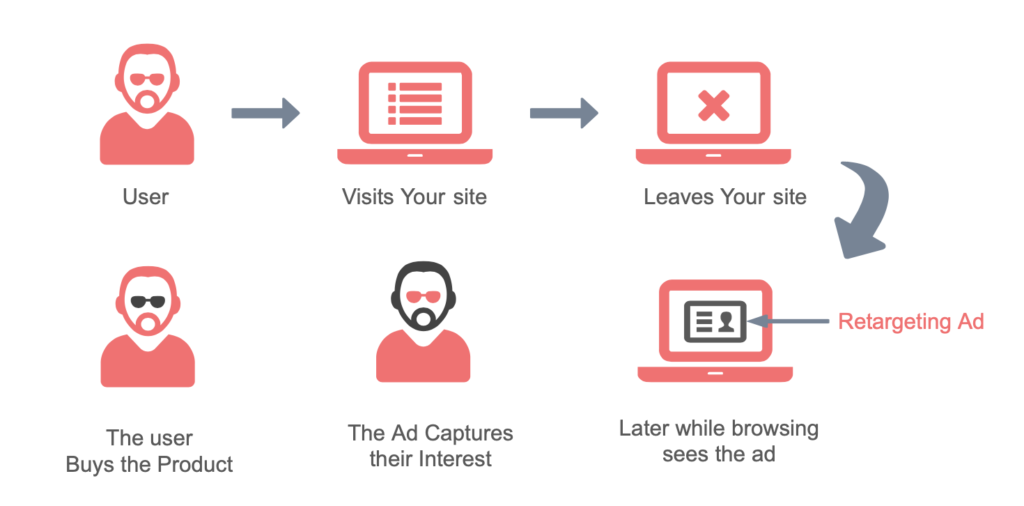
Retargeting is an online marketing strategy that involves serving customers on other websites with advertisements based on their prior browsing history on a company’s website. This powerful strategy helps online business owners to re-engage their customers who have interacted with their brand in the past. In this article, you will learn about the retargeting strategy, how it works, and some of the tools that are available to you for implementing the powerful strategy. What is Retargeting? Retargeting, which is also referred to as remarketing, is a method of online advertising that enables you to present your brand to the bounced traffic after they have left your website. In general, only 2 percent of visitors to any website convert during their first visit. Retargeting can be considered a tool that is designed to help your brand reach the 98 percent of visitors who do not convert when they visit your site for the first time. As such, the goal of a retargeting campaign is to encourage prospective past visitors to your website who did not take any action on their initial visit. How Does Retargeting Work? Retargeting, a cookie-based technology, makes use of a simple Javascript code that helps you to anonymously ‘follow’ your target audience all over the World Wide Web. You have to place a small piece of code (also called a pixel) inconspicuously on your website. It does not affect the performance of your website in any manner whatsoever. Every time a new user visits your site, the code drops a browser cookie. When these cookied visitors search the Web, later on, the cookie will alert your retargeting provider to serve ads at the right time. Retargeting is very effective because the focus is on people who already know your brand and have shown some interest recently. Most businesses that employ this strategy enjoy a higher ROI on their marketing spending. This powerful branding and conversion ratio optimization tool works best when used as part of your organization’s larger digital marketing strategy, which involves demand generation. AdWords, content marketing, and targeted display drive traffic, but they are not helpful in optimizing conversion rates. On the other hand, retargeting helps improve conversion rates but doesn’t drive traffic to your site. Types of Retargeting Search retargeting is the first thing that most marketers think about when working on a retargeting strategy. However, highly effective marketers explore other retargeting strategies. Some of the more effective types of retargeting you can consider are: 1. Dynamic Retargeting Ads This is a very powerful ad type, and it uses pixel data to display the most relevant products and ads to users based on their activities on your website. For instance, you can employ dynamic retargeting ads to show the visitors to your website the products they have viewed when they were on your site. This might encourage them to come back to your site and buy your product. Both Google and Facebook enable you to create such hyper-personalized ads. In order to set up dynamic retargeting ads on Facebook, the Facebook pixel has to be installed on all pages of your website. This allows you to track the visitors and their activities on your website. Furthermore, the pixel helps you with measuring cross-device conversions, creating custom website audiences, and designing dynamic ads. 2. Behavioural Retargeting Behavioural retargeting focuses on people who visited your site and didn’t convert but showed interest in your products or services. This means that you can reach out to these potential customers even though they have left your website and encourage them to come back and buy your product or service. Specifically, this strategy is very useful when someone visiting your website shows interest but abandons the shopping cart and quits. Whenever someone uses your website, a cookie is created. Using this cookie, you can find out which pages they visited, which products they bought or showed interest in buying, and what passwords they used. This means you can track the user and follow up with an email later, provided you have the user’s email ID. 3. Customer List Retargeting Research shows that 54 percent of customers who abandon the shopping cart on your eCommerce site are actually saying that they will buy the same product when they see a discount. Create a list of the users who abandon the shopping cart and get back to them via an effective customer list retargeting tool. A customer list retargeting tool helps you create lists by specifying rules for users who visit your website’s homepage, category page, product or offer page, members’ page, product or service bought page, or abandon the shopping cart. Then it helps you to automatically place personalized ads related to the products, services, or offers they were interested in on your site. Different Retargeting Tools Having discussed what retargeting is, how it works, and the different types of retargeting, here is a list of retargeting tools that you can use to increase customer engagement: 1. HockeyCurve The marketing technology company, HockeyCurve, provides end-to-end solutions which make use of big data to segment users as well as create high-intent dynamic product ads so that you can improve the return on your ad spend. HockeyCurve’s products include: Pixel: for dynamic product ads Ad Server: for quickly deploying ads Recommendations: using AI and ML to make recommendations Publisherplex: for increasing publisher revenue 2. AdRoll AdRoll provides eCommerce brands with a single platform that helps them easily place social media and display ads and launch email campaigns to engage existing customers, attract new customers, and grow their revenue. The tool tracks user behaviour in real-time and helps you save time and resources by launching campaigns across more than 500 platforms right from one place. 3. Google Ads If your goal is to drive more visitors to your website or apps, Google Ads is the best platform for you. Advertisers bid to post brief ads, product or service offerings, or videos on this platform to attract web users. Google Ads works on a pay-per-click pricing model.

